While looking at the big bronze plaque in our Memorial Garden with the names of our first six settled ministers inscribed on it I started thinking about the history of Westminster in terms of our settled ministers. I learned that Reverend Deborah is our 18th settled Minister, and I wanted to know about the first 17 and how they helped shape our faith and guide our many congregations through the last two centuries. In 2028 we will celebrate our 200th year!
I did some research and found an abundance of fascinating information that I’d like to share with you.
Although only Reverend Fred Gillis is "officially" calling our Memorial Garden home these
days, it’s interesting to meet and honor all the ministers who came before. I hope you
enjoy it!
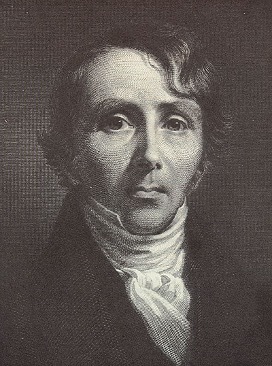
Rev. Frederick Augustus Farley (1828–1841)
(No photo available)
The Era: The very first settled minister, called right as the congregation was formed under the name "Westminster Congregational Society" in Providence.
Interesting Fact: Farley was a Harvard Divinity School graduate and a close friend of Unitarian pioneer William Ellery Channing (pictured here). He famously helped establish the church's initial theological identity as a "liberal, rational" alternative to orthodox Calvinism. William Ellery Channing delivered his famous sermon “Likeness to God” at his friend’s ordination.
The Era: Guided the church during a period of rapid intellectual and industrial growth in Rhode
Island.
Interesting Fact: Osgood was a highly prominent American author, scholar, and editor of the
Christian Inquirer. Later in his life, his theological journey took an unusual turn when he left the
Unitarian ministry to become an ordained Episcopal priest.
Rev. Hedge was a Unitarian minister and widely known as the person who was most instrumental in starting Transcendentalism, although he abandoned it later in life. He studied at Harvard Divinity School where he met his good friend Ralph Waldo Emerson. Hedge was ordained as a Unitarian minister in 1829 and served in several parishes. In 1850, after spending a year in Europe, he became pastor of the Westminster Church in Providence. In 1858, shortly after he left Westminster, Hedge returned to Harvard Divinity School as a professor of Ecclesiastical History. Deeply read in philosophy, ecclesiastical history, and German literature, he ranked as perhaps the foremost German literary scholar in the United States.
The Era: Anchored the congregation for an astonishing 35 years, spanning the Civil War and
the late Victorian era.
Interesting Fact: Woodbury was an intensely influential civic figure in Rhode Island. During
the Civil War, he took an active leave of absence to serve on the front lines as a military chaplain
for the 1st Rhode Island Volunteers. After the war, he became the state's premier military
historian, authoring highly acclaimed, multi-volume books documenting Rhode Island's
regiments.
Transatlantic Roots: Born and educated in England, he moved to the United States as an adult, giving his sermons a distinct British rhetorical flair.
The Transition Legacy: He had the daunting task of following Augustus Woodbury, who had served the congregation for nearly 40 years. Mott stabilized the church during this massive leadership shift before returning to preach in Massachusetts.
Physical Transformation: He was the driving force behind physically moving the congregation from its historic downtown location to a new home on Hamilton Street.
Active Civic Speaker: Known throughout Providence as an energetic public orator, he frequently spoke at local civic organizations, advocating for the expansion of public libraries and Sunday education programs.
World War I Service: During his 16-year pastorate—the longest of the four—he paused his ministry to serve as a military chaplain during World War I.
The Historian: He was deeply dedicated to the church's legacy, personally researching, writing, and compiling the definitive book on the congregation's first 100 years for its centennial celebration in 1928.
White House Visitor: He was highly active in national Unitarian leadership and social justice initiatives, even participating in high-profile committee meetings with President Harry S. Truman at the White House.
MIT Dean of Students: After leaving Providence to serve as Vice President of the American Unitarian Association, he later transitioned to higher education, becoming the Dean of Students at the Massachusetts Institute of Technology (MIT) in the late 1940s.
Tragic End: His promising career was cut short in August 1950 when he tragically died in an airplane crash in India while returning from an international student diplomatic mission. MIT named a prominent undergraduate cooperative dormitory, the Everet Moore Baker House, in his honor.
The Era: Led the congregation through the hardships of World War II.
Interesting Fact: Seebode was a fierce champion of interfaith solidarity. In June 1941, when the neighboring Jewish temple, Temple Beth-Israel, was devastated by a catastrophic fire, Seebode immediately had his congregation vote to donate their entire Sunday collection to help their Jewish neighbors rebuild their sanctuary.
The Era: Oversaw the massive, monumental transition as the church physically moved away from Providence to East Greenwich in 1958.
Interesting Fact: Before entering the ministry, Carter served in active duty in the U.S. Army during the Korean War. He was officially ordained right at Westminster and was tasked with keeping the congregation unified as they shifted from an urban capital church to a suburban community.
Between 1963 and 1973 there were a series of visiting and interim ministers, but a settled minister was not called.
The Era: Ministered during the post-merger Unitarian Universalist era in our modern Kenyon Avenue home.
Interesting Fact: Raised in a rural Minnesota farming parish, Flagg brought a distinctly pragmatic and modern humanist theology to the pulpit. He was revered for streamlining the church's administration with a highly flexible, creative problem-solving style and an unshakeable sense of optimism.
The Era: Provided stable, multi-decade leadership through the late-20th century.
Interesting Facts: Rev. Gillis was widely known throughout the Rhode Island religious community as a gentle and brilliant intellectual. He frequently partnered with other local progressive ministers to publicly challenge conservative social norms on local radio and in print media. Rev. Gillis was a 42-year member (as well as a “Saint”) of the Greenfield Group: the oldest Unitarian Universalist study group in North America. He was also honored as “Minister Emeritus” in 2003 when he left Westminster. He seems very happy in our Memorial Garden.
The Rev. Barbara Fast has a fascinating background, having lived a multi-faceted life before and during her ministry.
Interesting Facts: Before entering the ministry, Rev, Fast earned a law degree from Georgetown University and worked as a criminal prosecutor in New York state. Her passion for "fairness and justice" stems from her youth in 1968, heavily influenced by the civil rights movement and political marches of that era. While serving at Westminster, she actively promoted racial justice, notably introducing congregants to the Alabama Living Legacy Pilgrimage to study the Civil Rights movement firsthand.
The Era: The 17th settled minister who brought the church into its digital and modern social justice eras.
Interesting Facts: Born in the Netherlands, she grew up moving all over the world before finding a permanent home in New England. Before arriving in East Greenwich, she had a separate career in corporate information technology. She brought her personal love for the guitar and folk music directly into her Sunday worship services.
The Era: The 18th settled minister, installed to support and guide our congregation going forward.
Interesting Facts: Rev. Deborah experienced a dramatic mid-life career change; before entering the ministry, she spent decades as a professional natural foods chef, culinary instructor, and restaurateur. She was the Executive Chef for the world-renowned Kripalu Center for Yoga and Health in Massachusetts. Rev. Deborah is passionate about bringing spiritual awareness to everyday life and into the world of work. Her core values include service, inclusivity, authenticity, joy, and a commitment to seeing the Sacred in all. Rev. Deborah believes strongly in the necessity of putting one’s values into action and working to create a more just, peaceful, and compassionate world.
I researched and researched and I could only come up with 15 chronological called ministers. I checked all the time gaps and there were interim and visiting ministers during those gaps. It’s a mystery!! If you have any information on "the missing ministers" let me know at egagnon@gmail.com.